Battlefield to kitchen: How wars taught us to cook without cooking
Published on: March 22, 2026, 11:40 a.m. | Source: India Today
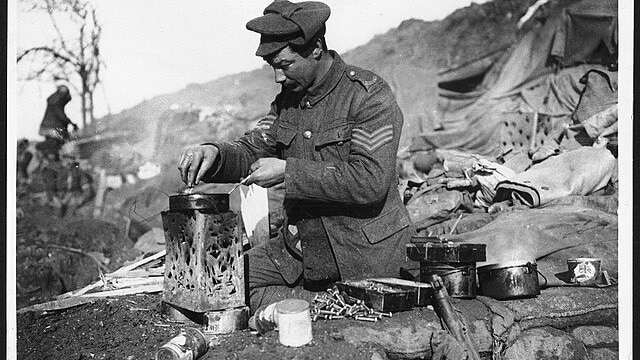
As fuel prices rise, the kitchen feels the war again. What soldiers once solved under fire now shapes everyday meals. Cooking, it turns out, may no longer require the moment.Last weekend, we followed food across battle lines, from trenches to tiffins, and saw how war reshaped what we eat. This week, the story moves further inward, into the kitchen itself, because war did not merely alter food habits but quietly dismantled the very idea of cooking as a daily act. As tensions between Iran and the United States disrupt global energy flows and trigger a sharp rise in LPG costs, this history no longer feels distant, but deeply embedded in the way modern households function. For most of human history, cooking was inseparable from fire, and fire itself was synonymous with survival. In times of peace, the act of lighting a stove carried associations of warmth and routine, but war reversed these meanings. In the trenches of the World Wars, a flame could betray a position, smoke could travel across distances, and even a flicker of light could invite danger. Soldiers often ate hurriedly, crouched low, with meals that were either half-prepared or entirely cold because the risks of cooking frequently outweighed its comforts. By the late twentieth century, militaries had begun to internalise a difficult truth that the safest kitchen in war was no kitchen at all. What followed was not innovation driven by comfort, but adaptation shaped by compulsion, marking the beginning of cooking without cooking. ⸻ Vietnam and the burden of movement The Vietnam War pushed this transition into sharper focus. Unlike earlier conflicts defined by static positions, Vietnam demanded constant movement through dense jungles and unpredictable terrain. Soldiers carried their world on their backs, and heavy canned rations quickly became impractical. In response, the military turned to freeze-dried food, which was lighter and easier to transport but still dependent on water and minimal preparation. The compromise was evident in the daily realities of soldiers, who could now carry food more efficiently but could not entirely escape the need to prepare it. Cooking had been reduced, but it had not yet disappeared. ⸻ Cooking before hunger: the retort revolution The decisive shift came with the development of the retort pouch, which transformed the relationship between time and food. Meals were fully cooked, sealed, and sterilised within multi-layered pouches, allowing them to remain safe for consumption over extended periods without refrigeration. For the first time, cooking was no longer tied to the moment of hunger, as it had already been completed well in advance. Food could be stored, transported across difficult terrains, and consumed instantly, effectively removing the kitchen from the immediate experience of eating. Cooking, in this sense, ceased to be an activity and became a condition that had already been fulfilled. ⸻ Heat without flame: the Gulf War solution Even so, the desire for warmth persisted, and it was addressed through another innovation that emerged just before the Gulf War. The flameless ration heater introduced a chemical solution to a problem that had long depended on fire. By combining magnesium, iron, and salt with water, the device could generate sufficient heat to warm a meal within minutes. It allowed soldiers to consume hot food without producing smoke or visible flame, eliminating one of the last visible traces of cooking on the battlefield. At this stage, cooking had not only been reduced but had also become almost entirely invisible. ⸻ Siachen and the limits of survival If jungles and deserts compelled innovation, glaciers such as Siachen brought it to its limits. In extreme high-altitude conditions, where temperatures drop drastically and fuel becomes scarce, even the basic act of boiling water becomes unreliable. The challenge in such environments was not merely to cook but to ensure that soldiers could eat at all. India’s response emerged from the Defence Food Research Laboratory in Mysuru, where scientists worked to create food that could withstand freezing temperatures, retain the complexity of Indian flavours, and require minimal preparation. Their efforts led to the development of shelf-stable meals and heating systems that did not rely on open flames, allowing soldiers to warm food within insulated environments despite the constraints of the terrain. ⸻ From battlefield necessity to supermarket staple As has often been the case with wartime innovation, these technologies gradually moved beyond the battlefield and entered civilian life. What was once designed to address extreme conditions became part of everyday convenience. By the early twenty-first century, ready-to-eat meals and pre-packaged food options had become commonplace, particularly in urban settings where time and resources were increasingly constrained. The same principles that had guided military food systems now shape the modern food industry, where meals can be prepared in advance, preserved for long durations, and consumed with minimal effort. ⸻ When geopolitics returns to the kitchen The present moment, marked by disruptions in LPG supply and rising fuel costs linked to tensions between Iran and the United States, serves as a reminder of how closely domestic life remains tied to global conflict. As cooking fuel becomes more expensive and less predictable, the relevance of these wartime innovations becomes clearer. Systems designed to reduce dependence on fuel and eliminate the need for immediate cooking are no longer confined to extreme situations but are increasingly embedded in everyday life. ⸻ The deeper shift: time, not just technology At its core, the transformation brought about by war extends beyond technology to the way time itself is structured around food. Cooking was once an immediate response to hunger, an activity that connected preparation directly with consumption. Today, that connection has been significantly altered. Food is often prepared in factories, engineered in laboratories, and consumed long after its creation, shifting the act of cooking away from the present moment and redefining its place in daily life. ⸻ The kitchen, redefined There is a certain irony in this transition. What began as a necessity for survival in conditions of conflict has evolved into a lifestyle choice in times of relative peace. The systems developed for soldiers operating under extreme constraints are now used by office workers, students, travellers, and households navigating the demands of modern life. The kitchen has not disappeared, but it no longer holds the same centrality it once did. Cooking is no longer an inevitability but an option among many. As energy uncertainties continue to shape everyday realities, the question that emerges is not simply what we choose to cook, but whether cooking itself remains necessary in the way it once was.

